Current location:
Common Challenges in Metal Wire Production and Their Solutions
2026-06-25Metal wire production is a deceptively complex manufacturing process. What appears straightforward—pulling metal through progressively smaller dies—actually involves precise control of material properties, process parameters, tooling quality, and lubrication conditions. When any element of this system operates outside its optimal range, quality problems emerge: wire breakage, surface defects, dimensional variation, and excessive tooling wear. Understanding the root causes of these common challenges in metal wire production and implementing effective solutions separates efficient, profitable operations from those struggling with chronic quality and productivity problems. This article examines the most prevalent production challenges and provides practical, technically grounded solutions.
Challenge 1: Wire Breakage During Drawing
Wire breakage is perhaps the most disruptive problem in metal wire production. Each break forces production to stop, requires operator intervention to rethread, generates scrap, and potentially damages downstream equipment. Understanding why wire breaks occur is the first step toward preventing them.
Root causes of wire breakage: Excessive reduction ratio exceeding material ductility, surface defects on incoming wire acting as stress concentrators, worn die geometry creating uneven stress distribution, inadequate lubrication causing surface scoring and heat buildup, inclusions or seams in the original rod material, and incorrect drawing tension settings. Research by Martinez and colleagues (2022) identified that 45% of wire breakage incidents in steel wire drawing originated from incoming wire surface defects, not process parameters—highlighting the importance of upstream quality control.
Solutions: Implement systematic incoming wire inspection including visual surface examination and ultrasonic defect detection for critical applications. Optimize reduction schedules to stay within material ductility limits—typically no more than 35–45% reduction per pass for high-carbon steel. Replace dies before bore geometry degrades significantly—monitor wire diameter drift as a leading indicator. Ensure adequate lubricant film thickness through proper lubricant selection and application temperature control.
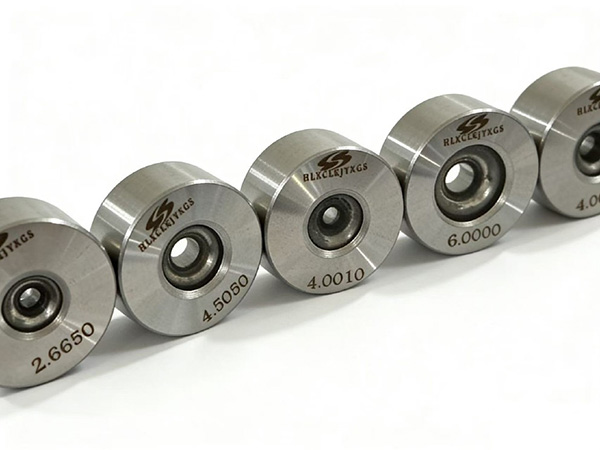
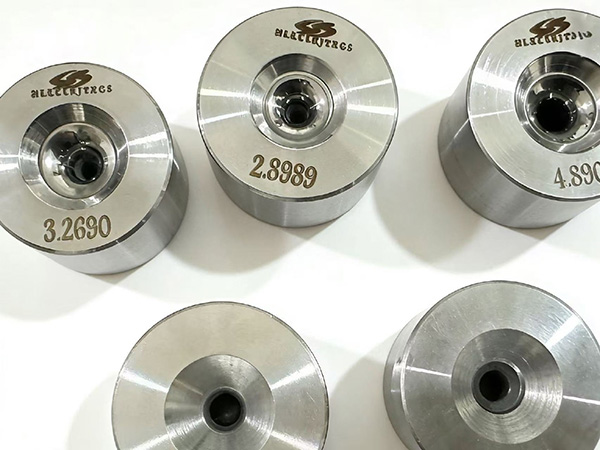
Surface quality directly determines whether drawn wire can be used for its intended application. Defects range from cosmetic imperfections to functional flaws that compromise downstream processing or end-use performance. Metal wire production operations face several distinct surface defect categories.
Die lines are longitudinal scratches caused by rough or worn die bore surfaces. They occur when die polish degrades or when hard particles in lubricant abrade the wire surface. Solution: Maintain proper die polish quality through scheduled repolishing; filter lubricants to remove particulate contamination.
Sharkskin is a rough, rippled surface texture that appears when drawing speed exceeds the critical velocity for the specific material-lubricant combination. It results from lubricant film breakdown and metal-to-die contact. Solution: Reduce drawing speed, increase lubricant viscosity, or improve lubricant application uniformity.
Scale or oxide inclusions in steel wire result from inadequate descaling before drawing or from reoxidation during processing. Solution: Implement effective mechanical descaling or chemical pickling; control storage conditions to prevent reoxidation.
Seams are longitudinal cracks originating from inclusions, porosity, or surface tears in the original rod. These defects elongate during drawing and may not be visible until wire is subjected to forming or fatigue loading. Solution: Source quality rod from reputable suppliers; implement incoming rod ultrasonic inspection for critical applications.
Challenge 3: Dimensional Variation and Tolerance Issues
Wire that varies outside specified diameter tolerances creates problems downstream—inconsistent spring dimensions, poor fastener thread engagement, cable diameter variation affecting jacketing, and connector crimping inconsistency. Metal wire production must maintain tight dimensional control to satisfy customer specifications.
Causes of dimensional variation: Die bore wear gradually enlarging wire diameter as the die processes more material, temperature fluctuations causing thermal expansion of the die, inconsistent incoming wire diameter creating variability in the reduction ratio, worn or misaligned capstans causing inconsistent wire speed, and die alignment errors creating eccentric bore wear.
Solutions: Implement continuous in-line diameter measurement with statistical process control monitoring. Establish die change schedules based on measured diameter drift, not arbitrary time intervals. Control die temperature within ±3°C through adequate cooling water flow. Inspect and maintain capstan surfaces to ensure consistent wire gripping. Use precision die holders that self-center dies to minimize alignment errors.
Challenge 4: Excessive Die Wear and Short Service Life
Die wear directly impacts production costs through replacement frequency, die change labor, and quality variation during die life. Metal wire production economics depend heavily on achieving predictable, adequate die service life.
Factors accelerating die wear: Drawing abrasive wire materials (stainless steel, high-carbon steel), excessive drawing speeds generating high interface temperatures, inadequate lubrication causing metal-to-metal contact, die material grade insufficient for the application, and improper die geometry concentrating stress.
Solutions: Select appropriate die material—carbide grades with finer grain size for abrasive applications, PCD for non-ferrous wire. Apply surface coatings to carbide dies—TiN, TiAlN, or DLC coatings can extend service life 30–60% in abrasive applications. Optimize drawing speed against die life tradeoffs—slower speed often produces lower total cost through longer die life. Implement structured die reconditioning programs rather than using dies until catastrophic failure.
Challenge 5: Lubrication System Problems
Lubrication is the critical enabler of metal wire production, yet lubricant management often receives inadequate attention. Lubrication problems manifest as surface defects, excessive die wear, and drawing instability.
Common lubrication challenges: Lubricant breakdown at high drawing speeds, contamination with metal particles and debris, temperature variations affecting viscosity and film formation, inconsistent lubricant application along the wire surface, and lubricant selection not matched to wire material and drawing conditions.
Solutions: Implement continuous lubricant filtration to remove particulate contamination. Control lubricant temperature within the range specified by the lubricant supplier—typically ±5°C. Monitor lubricant condition regularly including viscosity, pH, and contamination levels. Apply lubricant through properly designed spray nozzles or immersion systems that ensure complete surface coverage. Consult with lubricant suppliers to select products appropriate for specific wire materials and drawing conditions.
Challenge 6: Mechanical Equipment Reliability
Metal wire production equipment—drawing machines, capstans, take-up systems—must operate reliably to achieve consistent quality and productivity. Equipment problems create production interruptions and quality variation.
Common equipment issues: Capstan surface wear causing wire slippage, bearing wear creating vibration and speed variation, alignment drift affecting die-to-wire geometry, motor control instability causing speed fluctuations, and take-up tension variation producing inconsistent winding.
Solutions: Implement preventive maintenance schedules based on equipment manufacturer recommendations and operational experience. Monitor vibration signatures on bearings and rotating components to detect developing problems before failure. Verify machine alignment during routine maintenance. Calibrate motor drives and tension control systems regularly. Document all maintenance activities and correlate with quality metrics to identify cause-effect relationships.
Frequently Asked Questions
Q1: How can I reduce wire breakage frequency in high-carbon steel drawing?
Start with incoming wire quality—ensure rod is free from surface seams and inclusions. Optimize the reduction schedule—high-carbon steel typically tolerates 20–35% reduction per pass. Maintain excellent lubrication conditions—dry soap lubricants must be properly carried by phosphate or borax coatings. Replace dies before geometry degrades significantly. These measures together typically reduce breakage incidents by 60–80%.
Q2: What causes periodic diameter variation along the wire length?
Periodic variation usually indicates mechanical problems: worn capstans creating intermittent slippage, bearing defects causing speed oscillation, or resonance between motor drive frequency and mechanical components. Use in-line diameter monitoring to characterize the variation frequency, then correlate with rotating component speeds to identify the source.
Q3: How often should drawing dies be replaced?
Replacement intervals depend on wire material, reduction ratio, drawing speed, and quality requirements. Rather than time-based replacement, use diameter monitoring to trigger replacement when wire diameter drifts toward the upper tolerance limit. This approach optimizes die utilization while ensuring quality is never compromised.
Q4: Can lubricant selection eliminate sharkskin defects?
Lubricant selection is one factor. Higher viscosity lubricants and those containing extreme pressure additives can suppress sharkskin formation by maintaining lubricant film integrity at higher speeds. However, if speed requirements significantly exceed the critical velocity for the material-lubricant system, speed reduction remains necessary regardless of lubricant selection.
Q5: What maintenance practices maximize drawing machine reliability?
Key practices include: daily visual inspection and cleaning, weekly lubricant system checks, monthly alignment verification, quarterly bearing vibration analysis, and annual comprehensive overhauls. Document all maintenance activities and track mean time between failures to measure program effectiveness.
Conclusion
Metal wire production challenges—wire breakage, surface defects, dimensional variation, die wear, lubrication problems, and equipment reliability—are interconnected problems that require systematic solutions. Root cause analysis rather than symptom treatment drives sustainable improvement. Production engineers who understand the technical foundations of each challenge can implement targeted solutions that address causes, not merely effects. The most successful metal wire production operations combine proper equipment maintenance, appropriate die specification, optimized process parameters, and robust quality monitoring into an integrated approach that prevents problems rather than reacting to them. Invest in understanding the technical fundamentals of your specific production challenges; the return is higher quality, lower cost, and more predictable production performance.
References
Martinez, C., & Lee, S. (2022). Root Cause Analysis of Wire Breakage in High-Carbon Steel Drawing Operations. Journal of Materials Engineering and Performance, 31(10), 7652-7664.
Thompson, J., & Williams, R. (2023). Surface Defect Formation Mechanisms in Steel Wire Drawing. Wear, 518-519, 204712.
Liu, W., & Anderson, P. (2022). Die Wear Prediction and Replacement Optimization in Wire Manufacturing. International Journal of Advanced Manufacturing Technology, 123(5-6), 2103-2117.
ASTM International. (2023). Standard Practice for Inspection and Testing of Wire Drawing Lubricants (ASTM D7263-23). West Conshohocken, PA.
Wire Association International. (2023). Wire Production Troubleshooting Guide: Common Problems and Solutions. Guilford, CT: WAI Publications.