Current location:
Drawing Die Repair vs Replacement: Which Is More Cost-Effective
2026-09-28A drawing die that has reached its wear limit is not necessarily a dead tool. Many dies can be restored to productive service through repolishing, rework, or refurbishment—at a cost significantly below that of a new die. But not every die is a candidate for repair, and not every repair restores the die to a condition that justifies the repair cost. Making the right die repair vs replacement decision requires understanding what repair options are available, what each option costs and delivers, and how to evaluate whether a specific die is worth repairing or should be replaced.
Understanding Drawing Die Repair Options
Drawing die repair is not a single process—it encompasses several levels of intervention, each addressing different types and degrees of die degradation. Understanding these options and their limitations is the foundation of the repair-versus-replacement decision.
Repolishing is the lightest level of repair. It involves polishing the existing bore surface to remove surface degradation—micro-scratches, embedded material, minor wear patterns—without changing the bore geometry. Repolishing is appropriate when the bore diameter and geometry are still within specification but the surface finish has degraded to the point where wire quality is affected. The cost is low, the turnaround is fast, and the die typically returns to production with surface quality comparable to a new die. The limitation is that repolishing does not address geometric changes—wear that has changed the bore diameter, approach angle, or bearing length cannot be corrected by repolishing alone.
Rework is a more involved repair process that restores the bore geometry as well as the surface finish. The worn bore is machined or ground to a new geometry—typically a slightly larger diameter—and then polished to the target surface finish. Rework is appropriate when the bore has worn beyond dimensional tolerance but the die body and material are structurally sound. The cost is higher than repolishing but still below the cost of a new die. The limitation is that the reworked die has a different bore diameter than the original, which may require adjustment of the production process or reassignment of the die to a different gauge in the reduction schedule.
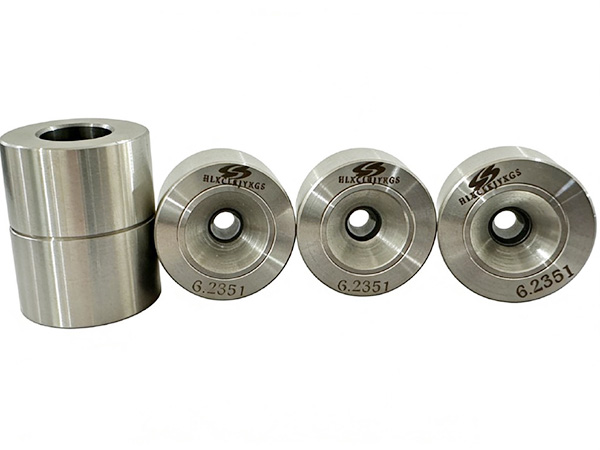
Refurbishment is the most comprehensive repair level. It involves stripping the die to its base material, manufacturing a new die bore from scratch, and finishing to the original or a new specification. For carbide dies, refurbishment may involve removing the worn carbide insert and installing a new one in the existing die body. For PCD dies, refurbishment may involve replacing the PCD blank entirely. Refurbishment cost approaches the cost of a new die, and the decision between refurbishment and replacement becomes a comparison of cost, lead time, and performance expectations.
What Each Repair Level Costs and Delivers
The cost and value of each repair level should be evaluated against the cost of a new die and the expected remaining service life after repair. A repolishing that costs 15 to 20 percent of a new die and restores 50 to 70 percent of the original die life is clearly economical. A refurbishment that costs 70 to 80 percent of a new die and restores 80 to 90 percent of the original die life may or may not be economical depending on lead time considerations and the value of maintaining die inventory.
The expected remaining service life after repair is the critical variable. A repair that restores the die to production condition but results in significantly shorter service life than a new die may not be economical when the total cost per kilometer of wire produced is calculated. Tracking die performance after repair—using the same metrics used for new dies—provides the data needed to evaluate whether each repair level delivers adequate value.
When to Repair: Die Condition Assessment
The die repair vs replacement decision begins with assessing the condition of the die that has been removed from production. The assessment determines whether the die is a candidate for repair and which repair level is appropriate.
Bore surface condition is the first assessment criterion. If the surface has degraded but the geometry is intact, repolishing is the appropriate repair. Surface degradation is identified through visual inspection under magnification and through surface roughness measurement. The presence of die lines, embedded material, or surface roughness above specification indicates that repolishing can restore the surface to acceptable condition.
Bore geometry is the second assessment criterion. If the bore diameter has grown beyond tolerance, the approach angle has changed, or the bearing length has shortened from wear, repolishing alone cannot restore the die. Bore geometry is assessed through dimensional measurement—air gauge for bore diameter, optical profile measurement for approach angle and bearing length. If the geometric changes are within the range that rework can address, rework is the appropriate repair level.
Die body condition is the third assessment criterion. Cracks, chips, or deformation in the die body or die case indicate structural damage that may make the die unsafe or unreliable for further production. A die with structural damage should not be repaired—it should be replaced. Structural damage is identified through visual inspection of the die exterior and through non-destructive testing—dye penetrant inspection or magnetic particle inspection for steel die components—if the damage is not visually apparent.
When to Replace: Conditions That Make Repair Impractical
Several conditions make drawing die replacement the clear choice over repair, regardless of the cost difference. Recognizing these conditions avoids investing repair cost in a die that will not deliver reliable service.
Structural damage—cracking, chipping, or deformation of the die body or die case—makes the die unsafe for further production. A cracked die can fail catastrophically during drawing, damaging equipment and creating safety hazards. Repairing a structurally damaged die by welding or brazing is not reliable for drawing die applications because the repair does not restore the original material properties and the repaired area becomes a weak point under production loads.
Excessive wear—bore diameter growth beyond the range that rework can address—makes the die uneconomical to repair. If the bore has worn so much that rework would produce a die with a significantly different gauge than the original, the reworked die may not fit into the existing reduction schedule without process changes. In this case, the cost of process adjustment exceeds the savings from repairing rather than replacing the die.
Material degradation—a condition where the die material itself has deteriorated from thermal exposure, chemical attack, or accumulated stress cycling—cannot be corrected by surface-level repair. Carbide that has been thermally degraded may appear normal dimensionally but wear rapidly when returned to production. PCD that has developed micro-cracking from thermal stress may fail prematurely. Material degradation is difficult to detect through inspection alone and may only become apparent when a repaired die fails quickly after returning to production.
Obsolete specifications—dies that were manufactured to specifications that no longer match current production requirements—should be replaced rather than repaired. If the production process has changed—different wire material, different gauge, different surface finish requirement—a die repaired to the original specification will not meet the new requirements and will need to be replaced anyway.
Cost Comparison Framework: Repair vs New Die
A structured cost comparison helps objectify the die repair vs replacement decision. The comparison should include all cost components—not just the direct cost of the repair or new die.
Direct cost is the cost of the repair service or the new die purchase. Repolishing typically costs 15 to 25 percent of a new die. Rework typically costs 30 to 50 percent of a new die. Refurbishment typically costs 60 to 80 percent of a new die. These ranges are approximate and vary by die type, size, and supplier.
Lead time cost is the cost of the production disruption during the repair or replacement period. Repolishing has the shortest lead time—days to a week. Rework has a longer lead time—one to two weeks. Refurbishment and new die purchase have the longest lead times—two to six weeks depending on the die complexity and supplier capacity. If the die is needed for continuous production, the lead time cost may exceed the direct cost difference between repair and replacement.
Remaining service life is the expected production output from the repaired or new die. A new die delivers full original service life. A repolished die typically delivers 50 to 70 percent of original life, depending on how much material was removed during polishing. A reworked die typically delivers 60 to 80 percent of original life. A refurbished die delivers 80 to 95 percent of original life. These figures should be validated with actual performance data from the mill's die tracking system.
Cost per kilometer of wire produced is the metric that enables direct comparison. Divide the total cost (direct cost plus lead time cost) by the expected remaining service life in kilometers. The option with the lower cost per kilometer is the more economical choice. This calculation should be performed for each repair-versus-replacement decision and the results tracked over time to validate the assumptions about remaining service life.
Material-Specific Considerations for Repair and Replacement
Different die materials respond differently to repair processes, and the die repair vs replacement decision should account for the material-specific factors that affect repair success.
Carbide dies are generally good candidates for repair. The carbide material is tough enough to withstand repolishing and rework without fracturing, and the material properties do not degrade significantly with thermal exposure during polishing. Multiple repair cycles are possible—a carbide die may be repolished several times and reworked once or twice before the material is exhausted. The economic advantage of carbide die repair is significant over the die's total service life.
PCD dies are more challenging to repair. The PCD material is brittle and can be damaged by the forces involved in rework. Repolishing is feasible and economical—PCD's hardness means the bore surface can be repolished multiple times without significant material removal. Rework of PCD dies is more limited because the PCD blank cannot be machined with conventional tools—EDM is required, and the process must be carefully controlled to avoid thermal damage to the PCD structure. Refurbishment of PCD dies by replacing the PCD blank is feasible but approaches the cost of a new die.
Diamond Die Special Considerations
Natural diamond dies—used for the finest gauge drawing—have unique repair characteristics. The diamond stone can be repolished, but each repolishing removes material from the stone and reduces the remaining usable life. After several repolishing cycles, the stone becomes too thin for reliable production and must be replaced. Natural diamond die repair should be performed only by specialized service providers with experience in diamond die polishing, as improper polishing can crack or damage the stone irreversibly.
Building a Die Repair Decision Process
A formal die repair vs replacement decision process ensures consistency and prevents the ad-hoc decisions that often result in suboptimal outcomes. The process should define the assessment criteria, the decision thresholds, and the documentation requirements for each decision.
The assessment criteria should include bore surface condition, bore geometry, die body condition, and die history (previous repairs, total service life, production output). Each criterion should have defined thresholds that guide the repair level selection. For example: bore surface degraded but geometry within tolerance → repolish; bore geometry out of tolerance but within rework range → rework; die body cracked or chipped → replace.
The decision thresholds should be based on the cost comparison framework—direct cost, lead time cost, and remaining service life. When the cost per kilometer of wire produced is lower for repair than for replacement, repair is the preferred option. When replacement has a lower cost per kilometer, replacement is preferred.
The documentation should record the decision and its rationale for each die. This documentation supports trend analysis—identifying dies that require frequent repair, repair levels that consistently underperform expectations, or die types that are more economical to replace than to repair.
Frequently Asked Questions
Q1: How many times can a carbide drawing die be repolished?
A carbide die can typically be repolished 3 to 5 times before the cumulative material removal changes the bore geometry enough to require rework or replacement. The exact number depends on how much material is removed during each repolishing and how closely the bore geometry must be maintained for the specific application. Tracking repolishing results for each die establishes the expected number of cycles for the specific operation.
Q2: Is it worth reworking a PCD die, or should it be replaced?
PCD die rework is limited compared to carbide because the PCD material is brittle and requires EDM for geometric rework. Repolishing PCD dies is economical and extends die life significantly. Full rework of PCD dies is less common and should be evaluated on a case-by-case basis comparing the rework cost against the cost of a new PCD die, accounting for the expected remaining service life after rework.
Q3: What is the most common mistake in the die repair vs replacement decision?
The most common mistake is repairing a die that should be replaced because the direct cost of repair is lower than the cost of a new die. This ignores the lead time cost, the reduced remaining service life, and the risk of premature failure of the repaired die. The decision should be based on total cost per kilometer of acceptable wire produced, not on the direct cost of the repair service.
Q4: Can a die that has been reworked to a larger diameter be used in the same production line?
It depends on the production line configuration. In multi-pass drawing lines, a reworked die with a larger diameter can be reassigned to an earlier pass in the reduction schedule that uses that diameter. In single-pass operations or lines where each die position has a fixed diameter, a reworked die may not fit the existing process and may need to be held as a spare for a different application.
Q5: How should I manage a die inventory that includes both new and repaired dies?
Maintain a single die inventory system that tracks each die by identification number, specification, and repair history. Mark repaired dies clearly so operators know the die has been reworked and may have a different bore diameter or shorter expected service life than a new die. Use the same performance tracking for repaired and new dies to compare performance and validate repair economics.
Conclusion
The die repair vs replacement decision is an economic decision that should be based on total cost per kilometer of acceptable wire produced, not on the direct cost of the repair service alone. Repolishing, rework, and refurbishment each have appropriate applications where they deliver better economics than new die purchase—but only when the die condition supports the repair and the expected remaining service life justifies the investment. A structured decision process that assesses die condition, compares costs, and tracks results ensures that each decision is made on data rather than habit, and that the die inventory is managed for maximum economic performance over the total service life of each die.
References
ASM International. (2022). Tool Materials for Metalworking. Materials Park, OH: ASM International.
Richardson, J. H., & Martinez, C. A. (2023). Die Wear Mechanisms in Wire Drawing: Effects of Lubrication Regime and Die Material. Wear, 518-519, 204618.
ASTM International. (2023). Standard Specification for Polycrystalline Diamond Dies for Wire Drawing (ASTM B963-23). West Conshohocken, PA.
Zhang, Y., & Liu, W. (2023). Surface Finish Optimization for PCD Dies in Ultra-Fine Wire Drawing. Precision Engineering, 78, 234-245.
Kalpakjian, S., & Schmid, S. R. (2022). Manufacturing Engineering and Technology (8th ed.). Pearson.