Current location:
Benefits of Bulk Supply from a Die Manufacturer for Wire Mills
2026-07-24Wire mills that go through hundreds or thousands of drawing dies every year face a recurring procurement question: buy in bulk from a dedicated die manufacturer or order piecemeal as the tooling crib runs low? The answer might seem obvious on the surface—bulk orders mean bigger invoices—but the real economics tell a different story. Bulk supply dies from a qualified manufacturer deliver advantages that go far beyond the unit price discount. Consistent quality across production batches, predictable lead times that eliminate emergency purchases, simplified inventory management, and technical support built into the relationship all contribute to a lower total cost of tooling ownership than transactional piece-by-piece buying can match. This article breaks down the specific benefits and what wire mills should look for when setting up a bulk supply agreement.
Volume Pricing and What It Actually Covers
The most visible benefit of committing to bulk supply dies from a die manufacturer is pricing leverage. When a wire mill commits to purchasing a defined volume over a set period, the manufacturer gains production predictability—they know what tooling to schedule, what raw materials to procure, and what capacity to reserve. That predictability allows them to operate their factory more efficiently, and some of those savings pass back to the buyer.
Typical volume discounts for bulk supply dies range from 10–25% below spot pricing, depending on die size, complexity, and annual volume commitment. For a mid-size wire mill spending $50,000–100,000 per year on dies, that discount alone can represent $10,000–25,000 in annual savings—real money that goes straight to the bottom line.
But the pricing benefit is not just about the discount percentage. Bulk agreements also lock in prices for the contract period, protecting the buyer from price increases driven by raw material cost fluctuations. Tungsten carbide powder prices move with global tungsten supply conditions; securing a fixed price through a bulk supply arrangement eliminates this uncertainty from the tooling budget.
Quality Consistency Across Production Batches
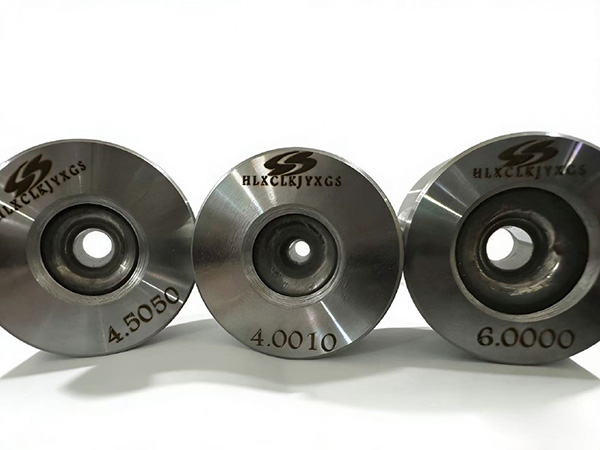
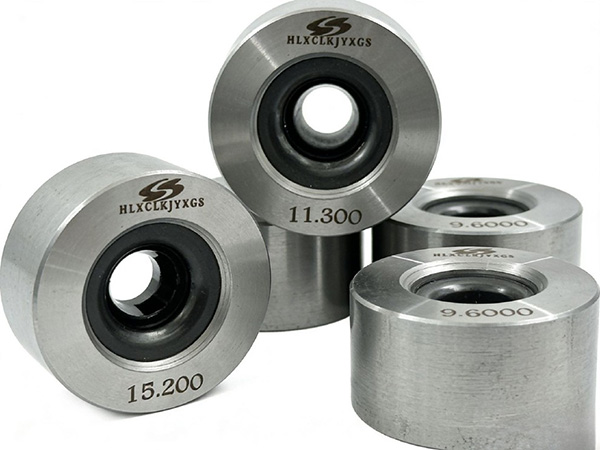
Wire mill production engineers know the frustration of switching to a new die batch and finding that dimensions shifted. A die manufacturer running continuous bulk supply dies through their production line maintains tighter process control than one producing small, intermittent lots. The reason is straightforward: consistent production volume allows the manufacturer to stabilize their processes, train operators on repeat work, and maintain setup parameters from run to run.
When a die manufacturer produces the same die sizes repeatedly as part of a bulk program, the dimensional variation between batches shrinks measurably. The approach angle on batch 47 matches batch 48 within tighter bounds because the EDM program, polishing sequence, and inspection criteria stay constant. For the wire mill, this means less process adjustment when swapping dies and more predictable wire diameter control from the first piece drawn.
Several wire mills that switched from transactional purchasing to bulk supply agreements reported a 30–50% reduction in die-related quality incidents—not because the dies were better designed, but because the consistency from one batch to the next eliminated the hidden variation that forced operators to keep adjusting the drawing process.
Supply Chain Stability and Lead Time Reliability
Nothing disrupts a wire mill's production schedule quite like a die manufacturer missing a delivery date. When the tooling crib runs empty and the production manager is staring at a shipping deadline, the scramble for emergency dies is both expensive and stressful. Bulk supply agreements address this problem at its root by aligning the manufacturer's production schedule with the buyer's consumption pattern.
Under a well-structured bulk arrangement, the die manufacturer keeps agreed inventory levels of the buyer's standard die sizes ready for shipment. Some manufacturers maintain dedicated storage for their bulk partners, guaranteeing that dies are available on short notice without the premium typically charged for expedited service. For the wire mill, this eliminates the lead time uncertainty that forces emergency purchases at elevated prices.
The supply chain stability extends to less obvious areas as well. When a manufacturer understands a buyer's consumption pattern, they can anticipate seasonal demand fluctuations and adjust their own raw material procurement accordingly. If a wire mill runs at higher capacity in the second half of the year to meet construction season demand, the bulk agreement ensures that die supply ramps up in parallel rather than becoming a bottleneck.
Inventory Management Simplification
A wire mill's tooling crib is a significant capital investment. Dies sitting in storage represent dollars that are not earning a return. Bulk supply arrangements from a die manufacturer can dramatically reduce the inventory carrying burden through just-in-time delivery scheduling and consignment stock programs.
Under a consignment model, the die manufacturer physically holds inventory at their facility (or at a regional warehouse), and the wire mill only pays for dies as they pull them into production. This eliminates the cash flow impact of carrying months of die inventory while ensuring that dies are available when needed. For a mill that consumes $80,000 worth of dies annually, converting to consignment-based bulk supply can free $15,000–25,000 in working capital that was previously tied up in safety stock.
Simplified ordering is another practical benefit. Instead of raising a purchase order every few weeks whenever the crib runs low, the bulk agreement defines a regular replenishment schedule—weekly, biweekly, or monthly—with automatic adjustments based on consumption data shared between the buyer and the manufacturer. This reduces procurement transaction costs and frees purchasing staff to focus on higher-value activities.
Technical Support Becomes A Partnership
A transactional die buyer gets technical support at the manufacturer's convenience. A bulk supply partner gets it on demand. The difference reflects the fundamentally different relationship dynamic between a manufacturer and a committed bulk buyer.
Die manufacturers who enter bulk supply agreements typically assign a dedicated technical contact to the account—someone who knows the buyer's wire materials, production parameters, and quality requirements. When an issue arises with die performance, the technical contact has the context to diagnose the problem quickly rather than starting from scratch. This continuity of knowledge reduces troubleshooting time and gets production back up faster.
Beyond reactive support, the relationship opens the door to proactive engineering cooperation. The manufacturer's engineers can monitor the buyer's die consumption data and wear patterns, identifying opportunities for geometry improvements or grade changes that would extend die life. These recommendations come from someone who understands the specific application, not a salesperson trying to upsell a premium product.
What To Look For In A Bulk Supply Agreement
Not all bulk supply arrangements deliver the same value. A few structural elements separate effective partnerships from agreements that look good on paper but create problems in practice.
First, the pricing formula should be transparent and tied to measurable factors—die size and complexity, carbide grade, coating, and volume tier—rather than vague percentage discounts. The buyer should understand exactly what each die costs and how changes in specifications affect pricing.
Second, the agreement should include clear quality specifications and acceptance criteria. A bulk supply supplier should commit to specified tolerances, surface finish ranges, and inspection methods for every die produced. Regular quality reports, including dimensional SPC data, provide objective evidence that the manufacturer is maintaining standards across production batches.
Third, the agreement should define lead time commitments, inventory levels, and the process for handling emergency requirements. A bulk supplier should guarantee availability of at least 80–90% of the buyer's standard die sizes within agreed lead times, with a clear escalation process if supply is disrupted.
Frequently Asked Questions
Q1: What annual die volume qualifies for bulk supply pricing?
Most die manufacturers set thresholds at 300–1000 dies per year, depending on die size and complexity. Smaller mills with volumes below these thresholds can sometimes negotiate bulk terms by grouping multiple sizes into a single commitment or by agreeing to longer contract terms such as two to three years.
Q2: Can bulk supply dies be customized to our specifications?
Yes. Bulk supply agreements can cover standard catalog dies, custom designs, or a mix of both. Many wire mills use bulk supply for their high-volume standard sizes while maintaining separate custom arrangements for specialty applications. The key is defining specifications clearly in the agreement so both parties know what is expected.
Q3: How do we handle dies that do not meet specifications in a bulk lot?
A proper bulk supply agreement includes a quality clause that covers defective dies. The standard approach is 90% replacement with the next scheduled shipment, plus credit for the defective units. Inspection should be the buyer's responsibility upon receipt, with a defined window—typically 15–30 days—for reporting non-conforming dies.
Q4: Does bulk supply lock us into a single supplier?
Not necessarily. Most wire mills allocate 70–80% of their die volume to a primary bulk supplier while maintaining one or two secondary suppliers for the remaining volume. This approach captures the benefits of bulk pricing and relationship depth while retaining the flexibility to compare performance across suppliers.
Q5: What happens if our production volume drops below the committed level?
Well-structured agreements include volume flexibility mechanisms. Common approaches include a minimum purchase commitment with a lower tier that adjusts pricing, or a take-or-pay clause that guarantees the manufacturer a baseline revenue but allows the buyer to carry credits forward to the next period. Negotiate flexibility before signing—neither party benefits from rigid volume commitments that do not reflect actual market conditions.
Conclusion
Bulk supply dies from a dedicated die manufacturer deliver measurable advantages over transactional piecemeal purchasing: lower unit pricing through volume leverage, tighter quality consistency across production batches, reliable lead times that eliminate costly emergency purchases, reduced inventory carrying costs, and technical support that runs deeper than what spot buyers receive. The key to capturing these benefits is structuring the agreement carefully—defining pricing transparency, quality specifications, lead time commitments, and volume flexibility in terms that protect both parties. A well-executed bulk supply relationship does not just save money on dies; it strengthens the entire production supply chain. Wire mills that treat die procurement as a strategic partnership rather than a series of individual transactions consistently achieve lower total tooling costs and more predictable production outcomes.
References
Miller, J., & Chang, H. (2023). Strategic Sourcing and Volume Agreements in Industrial Consumable Procurement. Journal of Supply Chain Management, 59(2), 45-62.
Thompson, R., & Park, S. (2022). Inventory Optimization Through Consignment Arrangements in Tooling Supply Chains. International Journal of Production Economics, 248, 108491.
Zhang, L., & Williams, D. (2023). Quality Consistency Analysis in High-Volume Die Production: A Statistical Process Control Approach. Precision Engineering, 80, 167-178.
Kumar, A., & Singh, R. (2022). Cost-Benefit Framework for Industrial Bulk Purchasing Agreements in Manufacturing. Journal of Industrial Engineering and Management, 15(3), 412-428.
European Cutting Tool Association. (2023). Best Practices for Volume Supply Agreements in Precision Tooling Procurement. Brussels: ECTA Guidelines Publication.